United Nations

BRICS’ COP30 climate goals could scale up global sustainable fashion by Nina Gbor

BRICS COP30 climate action 1

Image credit: Mathias Reding

The fashion industry is responsible for about 8% of global greenhouse gas emissions according to the United Nations. At its current trajectory, the industry’s emissions could rise to 26% or a quarter of the world's carbon budget by 2050. Deemed one of the most polluting industries in the world, it uses 342 million barrels of oil (fossil fuels) to make synthetic textiles. It produces greenhouse gas emissions equivalent to around 1.2 billion tonnes of CO2 each year – more than shipping and aviation combined. Despite fashion’s contribution to climate issues, it’s not always included in top level climate discussions.

The UN Framework Convention on Climate Change (UNFCCC)’s 30th annual Conference of Parties aka COP30, is the world’s largest and most important annual climate conference with nearly 200 nations is running from November 10 to 21, 2025. The host country, Brazil, insisted that this year’s summit must lead to ‘implementation’, calling it “the COP of implementation”. In addition to setting this year’s COP30 agenda, Brazil also holds the current presidency of BRICS countries- the economic and political trade cooperation bloc made up of ten emerging economies. The COP30 agenda is structured around several themes, three of which relate more closely with fashion emissions:

Transitioning energy and industry is about transitioning away from fossil fuels towards clean energy sources. The connection with the fashion industry relates to the reliance on fossil fuels for the production of synthetic textiles such as polyester being a significant driver of climate change.

Stewarding forests, oceans, and biodiversity focuses on protecting ecosystems, ending deforestation and acknowledging the role of these areas in climate regulation. The fashion industry is a culprit here because it relies on these ecosystems for raw materials and water, yet its practices such as deforestation, pollution, and resource-intensive production severely damage them. This creates a cycle of degradation, biodiversity loss and destruction of ecosystems, which undermines the very natural resources it depends on and exacerbates climate change.

Unleashing enablers and accelerators, including finance, technology and capacity building covers guidelines of climate action, such as mobilising climate finance, developing and deploying technology and building capacity. This can provide a framework for the fashion industry to minimise its greenhouse gas emissions, aligning with goals such as those of set by the UN Fashion Industry Charter for Climate Action and the Paris Agreement.

COP30 COP31 fashion BRICS fashion climate 1

Image credit: Marcus Loke

Australia’s fashion overconsumption and COP30 commitment

In regards to fashion and emissions, Australia is one of the biggest consumers of fashion and most wasteful in the world per capita. Australia is also in attendance at COP30 and has committed to Brazil’s leadership in the COP30 agenda which addresses some fashion-related climate issues:    

  • deliver the clean energy transition

  • further reduce global emissions

  • strengthen adaptation efforts

  • mobilise resources for climate finance

  • unlock investment in clean energy solutions for Australia and our region. 

BRICS green manufacturing agenda can provide a framework for the sustainable development of Australia and the global textiles & fashion sector.

BRICS’ sustainable governance declaration

In July 2025, BRICS’ ten-member states (Brazil, Russia, India, China, South Africa, Indonesia, United Arab Emirates, Ethiopia, Egypt and Iran) held a meeting in Rio de Janeiro, Brazil. The bloc’s meeting reaffirmed their commitment to the objectives of United Nations Framework Convention on Climate Change (UNFCCC) and the Paris Agreement in tackling climate change and mitigating, adapting and providing the means of implementation to developing countries. In Rio de Janeiro, the bloc produced a declaration, ‘Strengthening Global South Cooperation for a More Inclusive and Sustainable Governance’ also known as BRICS Leaders Declaration detailing a set of climate policies specifically targeted at the negotiations at COP30 in the city of Belem, in Brazil in November 2025. These policies of climate finance, carbon accounting, energy transition and a multilateral sustainability platform are additionally suitable for addressing fashion’s emissions and pollution problems.

In a statement addressing Brazil’s COP30-BRICS climate convergence, the Interim Executive Director, World Resources Institute, Brazil Mirela Sandrini said “Brazil deserves credit for bringing the BRICS together behind a more assertive vision for climate action. Brazil is deftly weaving climate diplomacy into the fabric of broader global agendas – from its G20 Presidency to BRICS and soon the COP30 summit.  This integrated approach helps reduce fragmentation across international fora and positions climate policy as a cornerstone of global economic and financial reform – driving the inclusive, green growth the world urgently needs.”   

BRICS to COP30 climate policies (à la fashion)

Climate finance

Strengthening climate finance, increased climate lending and deeper green bond markets are one of the BRICS’ climate policy asks. The BRICS declaration emphasised “ensuring accessible, timely and affordable climate finance for developing countries is critical for enabling just transitions pathways that combine climate action with sustainable development.” This means advancing the existing responsibility of mobilising and providing resources from developed countries towards developing countries under the UNFCCC and its Paris Agreement.

The declaration includes the objective to strengthen pathways and mechanisms that involve and incentivise private sector climate finance & investment efforts and complement public finance flows to this mission.

It’s assumed that the declaration’s climate policy is reinforcing the agreement created at COP29 in 2024 for a new climate finance goal, New Collective Quantified Goal (NCQG). This was designed to provide USD $300 billion annually by 2035 to developing countries with a bigger target for all actors both in public and private sectors to mobilise a minimum of USD $1.3 trillion by 2035; far closer to the amount developing countries need for the mitigation, adaptation, and loss and damage.    

Climate finance stems from wealthier nations historically contributing far more to climate change. Critics such as Oxfam have raised concerns that the mix of private investment and loans under climate finance could lead to more debt for vulnerable developing nations rather providing fair and equitable financial climate support.

The July BRICS declaration addresses debt around international financial cooperation, saying “High interest rates and tighter financing conditions worsen debt vulnerabilities in many countries. We believe it is necessary to address the international debt properly and in a holistic manner to support economic recovery and sustainable development….”

If implemented correctly, there are a plethora of ways that climate finance can be useful in salvaging the environment from fashion’s harmful operations. According to the Australian Broadcasting Corporation (ABC), every year, as many as 4 million tonnes of used textiles are shipped across the planet from North to South. Around 40% of imported clothing bundles are unsellable, unusable and unwearable according to Greenpeace. They are immediately destined for landfill, incineration or end up polluting beaches and waterways. Climate finance could mitigate a significant amount of the environmental impact of this waste stream.

Energy Transitions – Reaching adequate, predictable and accessible low-cost and concessional finance to bridge the funding gap for energy transitions is one of the bloc’s summit priorities. As manufacturing is a major and fundamental aspect of fashion production, the industry’s sustainability can benefit significantly from finance for energy transitions.

Carbon accounting

The declaration pushes for a mutually recognised system, methodologies and standard for assessing greenhouse gas emissions for a more balanced international approach by manifesting the BRICS Principles for Fair, Inclusive, and Transparent Carbon Accounting. It focuses on creating carbon accounting standards for product and facility footprints that consider diverse circumstances of different nations. The standard most used in the fashion industry for carbon accounting is potentially the ISO 14067 which provides a framework for only calculating a product's carbon footprint through a "cradle-to-grave" lifecycle assessment (LCA) but does not include the facility’s footprint, nor associated circumstances.  

Multilateral climate, sustainability & trade platform

The BRICS Laboratory for Trade, Climate Change and Sustainable Development is a platform for collaborating on mutually supportive approaches to trade and environmental policy. It enables BRICS members to not only benefit from trade but also collectively respond to unilateral measures and contribute to global efforts in addressing environmental challenges.

This can serve as a model for a new unified international fashion platform or for existing organisations, such as the UN Fashion Industry Charter for Climate Action, to either step up or create a coordinated agenda of environmental policy, legislation, sustainable trade and global best practice principles. Different countries have been passing various forms of legislation, creating policies and programs for trade to combat the harm done by the fashion industry. It could be highly effective to have a global sustainable fashion platform.

As COP30 has been designated the ‘COP of implementation’ along with the BRICS declaration climate policies for the climate summit, fashion might be able to adopt these measures to advance positive climate and environmental outcomes.


Article by Nina Gbor


Fashion, women's rights and free trade agreements by Nina Gbor

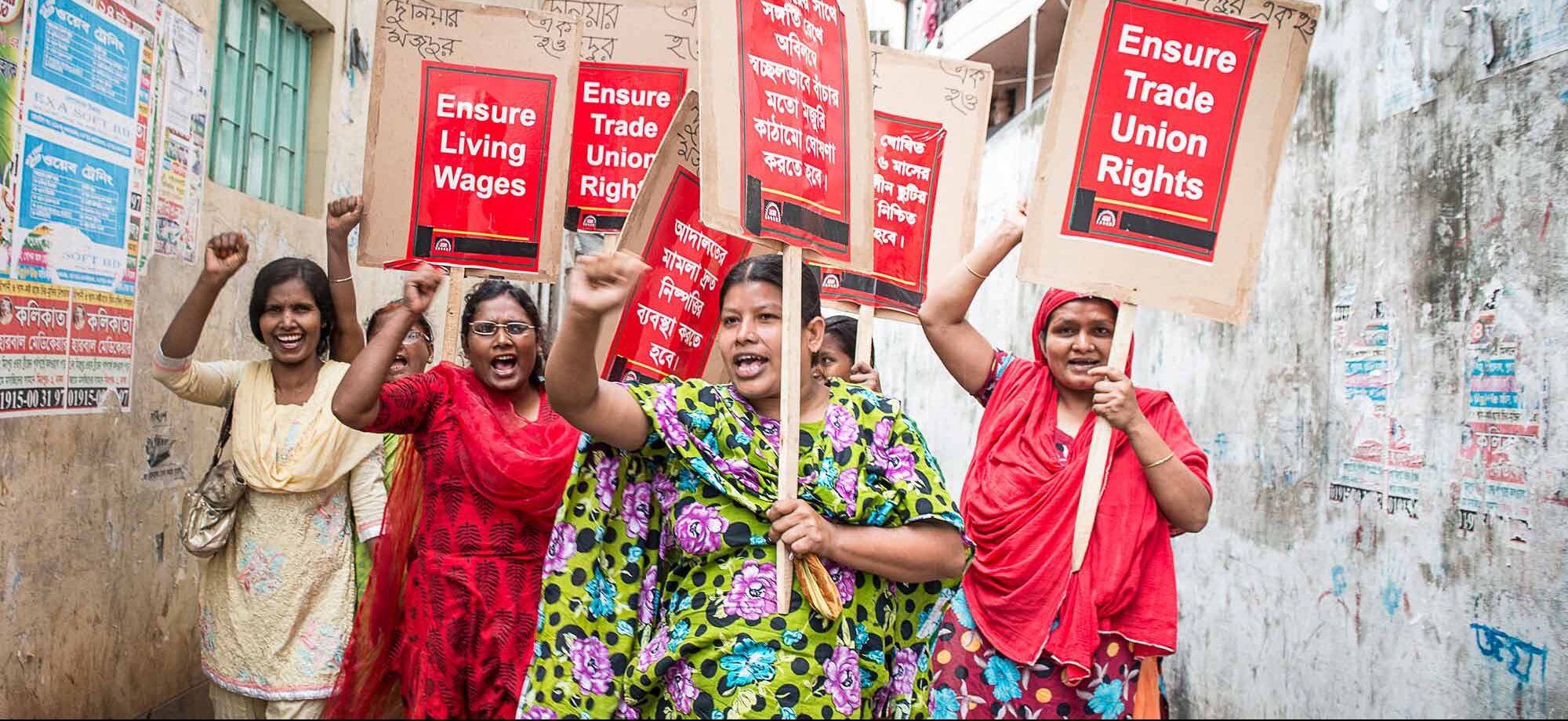
Photo courtesy of ActionAid Australia.

Photo courtesy of ActionAid Australia.

It’s now common knowledge that the fashion industry is not only one of the most polluting industries in the world, but it’s also laden with a lot of social injustice issues such as systemic poverty, unfair wages and lives being lost due to manufacturing. Through the efforts of activists, ethical brands and organisations like Fashion Revolution, Wardrobe Crisis, Ellen Macarthur Foundation and Eco-Age, many people are demanding ethical standards from the brands who make our clothes. However, for a more thorough and holistic shift in these issues, we need the involvement of governments, particularly where laws are concerned.

I wonder at what point in our modern history we degenerated into thinking human life was so worthless. When did it become okay to place profits and economic growth over human lives under the guise of progress? Or has this notion altogether been slyly omitted from the era of modernity and civilisation? Earlier this year the Regional Comprehensive Economic Partnership (RCEP) trade agreement came to my attention through AFTINET (Australian Fair Trade & Investment Network) and a human rights campaign created by ActionAid Australia called #TransformTradeForWomen. RCEP is a trade agreement potentially in its last leg of negotiations. If signed in its current state, it will have laws that in essence, trade corporate profits over human rights and the environment. Sadly, this notion of profit over people and planet appears to be a fundamental principle driving much of the top-level decision-making in many governments and business corporations.

Free trade agreements (FTAs) are international treaties between two or more nations that set the rules regarding trade and investment. FTAs reduce barriers to trade by giving more rights to corporations and reducing tax on imports for example. Through giving more rights to multinational corporations as an incentive to trade, they can create access to new markets for businesses in a nation and increased opportunities for foreign investment in that country. The idea is to boost economic growth of member nations. However, it’s quickly becoming a well-known fact that FTAs are rigged in favour of multinational corporations.  These agreements are increasingly becoming booby trapped with policies that heavily impact lives and rights of workers, especially women. RCEP is a massive free trade agreement between 16 member states that collectively make up nearly half of the world’s population. They include Australia, New Zealand and fourteen Asian nations, including the ten ASEAN member states. This agreement will have huge socio-economic ramifications on low-income countries – the workers, women and of course the garment workers. Therefore, if this deal goes through in the present form, it’ll boost the power of multinational corporations, to operate in ways that further damage the environment and human rights.

Whenever there’s a disaster of some kind, economic downturn or similar circumstance, women are always hit the hardest. About 80% of garment workers in the world are women. Because a significant portion of garments is made in some of the RCEP nations, the agreement can potentially have a lasting impact on the outcome of sustainability in the fashion industry (and other industries too). As FTAs are covertly designed to profit corporations at the expense of everyday people, the matter is systemically linked to women’s rights, gender equality and poverty. Therefore, signing a trade agreement with such a broad-stroke impact under these circumstances amounts to an act of brinkmanship.

According to information gathered by AFTINET, these are some of the ramifications of FTAs and RCEP:

1. The threat to women’s access to decent jobs

Trade agreements encourage multinational companies to manufacture in sectors like clothing by driving down wages and undermining worker’s rights. This is partially because normal labour rights and standards may not apply within designated “special economic zones”, drafted in some trade deals. RCEP will make provisions for corporations to employ and pay women unfair, low wages. It will validate corporations employing women in poor, sometimes unsafe working conditions. This is already a huge problem in low-income states; therefore, it will make it harder to find solutions to end exploitation and eradicate poverty cycles. Ultimately, it would make it even harder for female garment workers to find some form of self-empowerment.  

2. Temporary migrant workers could face increased exploitation

Temporary migration can be an avenue for women from low-income countries to make higher incomes, however, the reality is that these women often end up being exploited in poorly paid sectors.

3. Environment and climate change

FTAs can propel climate damage and threaten action on climate change. By inciting companies to take their manufacturing and polluting operations to nations with lower environmental safeguards, FTAs can contribute to climate change and other environmental issues. They also place barriers on the ability of governments to respond to climate change, which is unjustly impacting women around the world.

Some FTAs have a clause called the ‘Investor State Dispute Settlement’ (ISDS), which is a policy designed to give multinational corporations the impetus to sue governments if they feel a change in national law or policy will reduce their profits. For example, raising the minimum wage or laws to reduce carbon pollution. In other words, corporations can sue governments over laws that protect women’s rights over profits. Many cases presently being deliberated under trade deals include mining companies suing governments because of foregone profits from environmental regulations.

UN specialists have contributed to this theory, noting that the fear of being sued means governments are less inclined to pass laws that are crucial for people and planet. As of mid-September 2019, RCEP has excluded the ISDS clause from the deal.

4. E-Commerce inequality

In an article written in The Interpreter, Rahul Nath Choudhury has voiced concern from the perspective of most developing countries about the inclusion of e-commerce within FTAs. Some feel that it’s a covert method of using international rules that favour big tech corporations from developed countries to exclude developing countries from the digital economy.  

5. Access to public services like healthcare and education.

FTAs in general need tariffs to be reduced, which in turn minimises government revenue available for public services like healthcare, transport, and education which are a critical part of ensuring that women’s basic needs are met. By doing this they disable gender equality.

Healthcare – Amongst other health matters, AFTINET Convener, Dr Pat Ranald expressed concern over RCEP proposals for long-term monopolies on medicines that would delay the ability of affordable, generic medicines to be made available in developing countries.

Education - The lack of access to education for women and girls has a huge domino effect on so many things. It makes them more vulnerable to things like modern slavery, early childhood marriages, trafficking, etc.

Women make up more than half of the world’s population. And one can even say, that, that in itself equates to an enormous pool of resource and potential. UN Women has said, “Increasing women’s and girls’ educational attainment contributes to women’s economic empowerment and more inclusive economic growth.” Educating women and girls is the key to solving so many of the world’s problems. It means they’ll have opportunities to participate, contribute and have more leadership opportunities. And when it comes to issues like economic growth, empowering half of the population seems like a very long-term strategy for ensuring continued economic growth. So, when you look at it from that angle, it’s not practical to allow women to be disempowered in these ways. It really makes no sense at all to ignore the rights of women, particularly at the top level-decision-making. It affects economic development, politics, social development and the GDP. Billions of dollars of development and growth are lost from denying women access to education and from disempowering them. This is a fundamental pathway to creating positive change in the world. When women are empowered, the entire family, community and nation benefits. Which means the world benefits.

Just as women in the global north experience pay gaps, inequality, harassment and discrimination, women in low-income countries experience these injustices to a much higher degree. So, I believe that Western people being in a position of higher privilege, have the power to shift circumstances towards positive change, not only for garment workers but women in general.

FTAs can be a great way to systemise women’s rights. We have agency to use agreements like RCEP to change circumstances that will have huge ramifications on half of the globe in regard to women’s lives, communities and future generations. This is crucial not only for economic development but for progression in areas of politics, wellbeing, health, science and climate action. It will be on point for us to have RCEP amended to include the rights of women. And furthermore, using the gravitas of such an agreement, make it the standard for all future trade agreements to have women’s rights as a fundamental requirement before the drafting process even begins.

This is not just a women’s fight for women, it’s a people’s fight for the progression of humanity. And we hope that governments can see the value in it as well.

AFTINET - To stay up-to-date with developments on RCEP, follow AFTINET here.

ActionAid Australia - To learn more and support #TransformTradeForWomen, sign ActionAid’s RCEP petition here. You can also do the following:

  • Look into joining your local activist group and find out how you can get involved with a campaign in your community.

  • Watch their events page to find out if there is a campaign event happening near you. 

  • Donate to help power the campaign and make sure they have the resources to run hard-hitting stunts, grow public support across Australia, and use creative tactics to target key decision-makers.

  • Follow ActionAid on FacebookInstagram and Twitter to make sure you’re first to hear all the latest ways to take action on a campaign.

 Dr Patricia Ranald, Convenor of AFTINET will be speaking at The True Cost Movie screening event organised by ActionAid Australia on October 30th. Find tickets here.

- Nina Gbor

Sources: http://aftinet.org.au/cms/Regional-Comprehensive-Economic-Partnership-RCEP https://actionaid.org.au/actions/rcep-petition/

Secret Sisterhood social enterprise for women by Nina Gbor

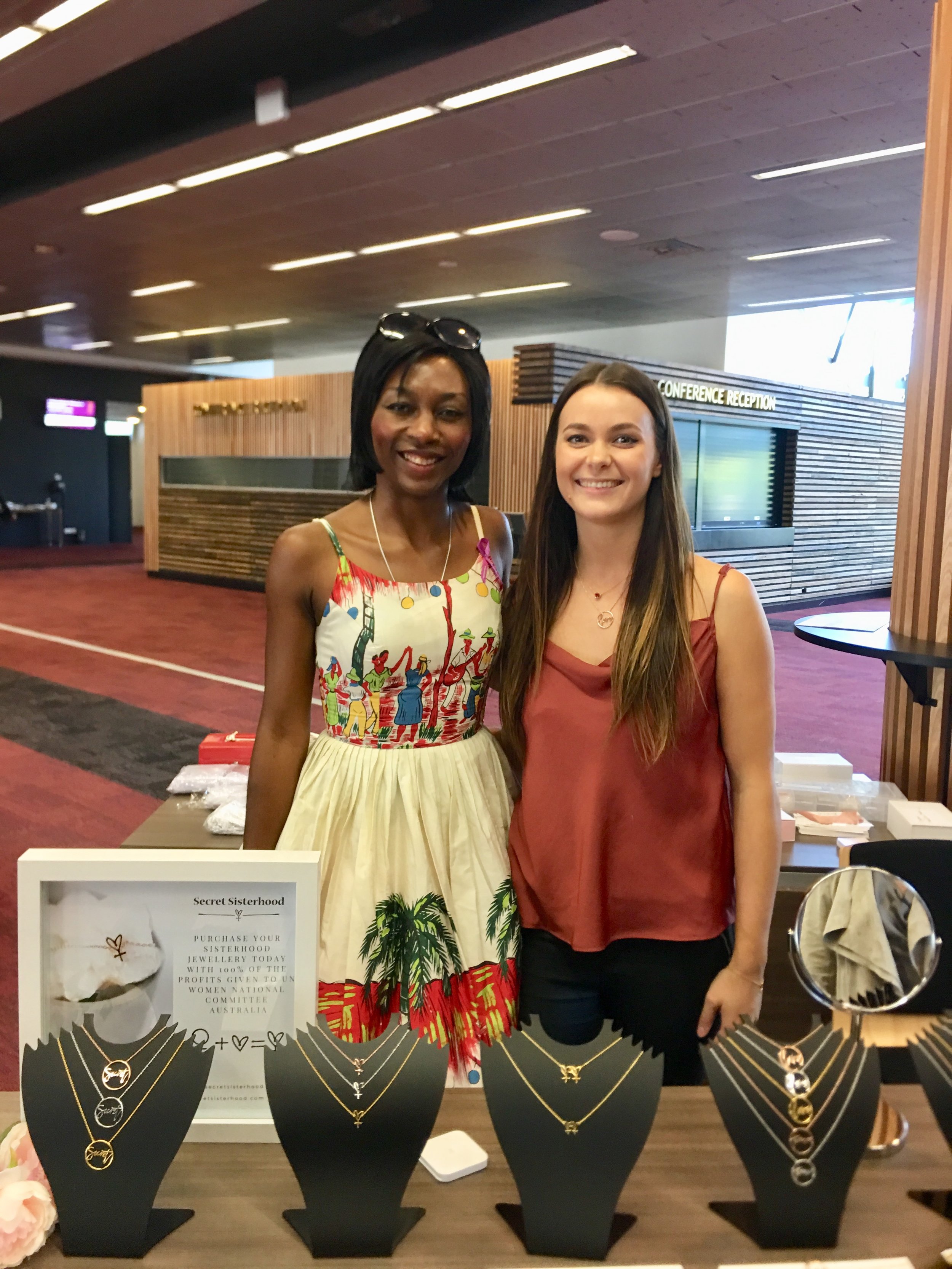
Nina Gbor on the left hand side. Jacquie Love on the right hand side.

Nina Gbor on the left hand side. Jacquie Love on the right hand side.

I’m all for social enterprises that empower, uplift and inspire women. I spotted the lovely Jacquie Love outside of the International Women’s Day event, held by the UN Women National Committee Australia in Canberra last month. 

IMG_9025.JPG

Jacquie was raising funds for UN Women’s gender inequality initiatives by selling beautiful jewellery she designs for the label she founded, Secret Sisterhood. It’s a mission/purpose driven social enterprise that employs women in India to make the jewellery and then gives 100% of profits to charities aimed at ending gender inequality. 

CL_SecretSisterhood27.jpg

Secret Sisterhood is also a movement, a growing community of women and girls with the collective goal of ending gender equality. They are a global community connecting through events, services and of course jewellery.  One of the things that caught my eye at the UN Women event were the compliment cards from Secret Sisterhood. Inscribed with phrases like “You are really strong” or “You should be so proud”, this is the perfect thing to completely shift someone’s day into a happy one. I might even keep a few in my wallet as my self-love affirmations.

CL_SecretSisterhood4.jpg
IMG_9041.jpg

I also loved their Intentional Words jewellery line each with words like Love, Gratitude, Kindness and Peace. These are pieces I would wear with nearly any style of outfit. It feels good having a positive word or symbol with me all day long. 

IMG_9024.JPG
CL_SecretSisterhood19.jpg

Needless to say, I’m now officially a fan of Secret Sisterhood. It’s one of the exemplary enterprises, showing how a business can be run in a way that uplifts, supports everyone involved.  

*Photos from Nina Gbor and supplied by Secret Sisterhood

♥ Nina Gbor